


JASP 2025: Literary Bestsellers of 1811

Updated: May 3, 2025
Hello, dear readers! If you didn’t know, JASP 2025: Sensibility and Domesticity will focus not only on Austen’s debut novel Sense and Sensibility, but also transatlantic literature and other topics in 1811, considering the birth of Austen’s career as a published author. In this article, you’ll learn about three other bestselling novels published in 1811—Austen’s first taste of literary competition, if you will. How do they measure up to Sense and Sensibility? Keep reading to find out!
Mary Brunton’s Self-Control
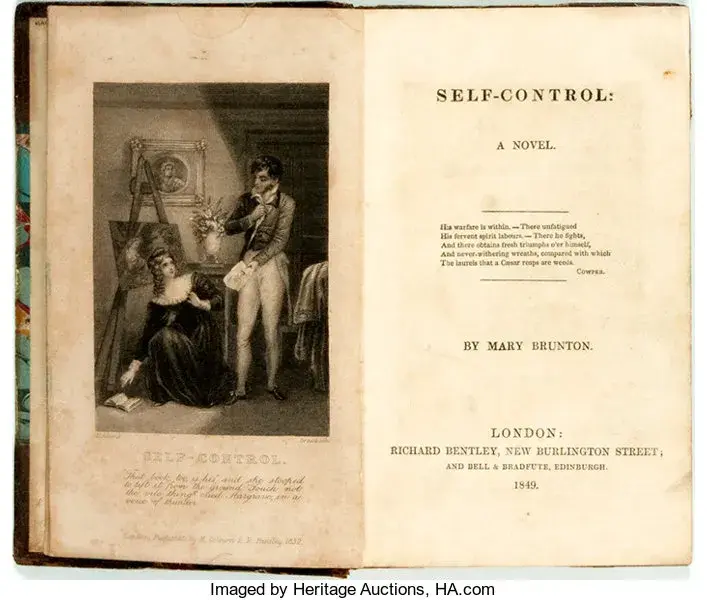
Self-Control was the first of three novels written by Mary Brunton, followed by Discipline in 1814 and Emmeline in 1819, the latter published posthumously by her husband as an unfinished fragment. Self-Control tells the sensational story of Laura Montreville, a young woman growing up in the Scottish Highlands whose education and devout faith give her strong moral principles—much like Mansfield Park’s Fanny Price. Throughout the novel, Laura must resist the increasingly violent and extreme advances of the nefarious Colonel Hargrave—including a dramatic kidnapping plot—to secure her happily ever after, proving that “reformed rakes” do NOT always “make the best husbands.” Described by Anthony Mandal as an “overnight bestseller,” Self-Control received four editions within its first year of publication.
Charlotte Dacre’s The Passions
An epistolary work following several major characters, The Passions revolves around the beautiful and wealthy Countess Appollonia Zulmer, a nineteenth-century “man-eater” who swears revenge on Count Wiemar and his young bride, a “simple and obedient” woman named Julia, when he rejects her romantic advances. Like Charlotte Dacre’s other novels, this Gothic romance ran to multiple printings and became a staple volume of circulating libraries and ladies’ magazines but never garnered critical acclaim. Instead, The Passions received harsh accusations of moral depravity, wanton sexuality, and sentimentality, especially from Evangelicals and other religious groups of her day. Regardless, modern critics acknowledge Dacre’s significant influence on later literary figures, such as Lord Byron and Percy Bysshe Shelley, in the Gothic genre.
Friedrich de la Motte Fouqué’s Undine
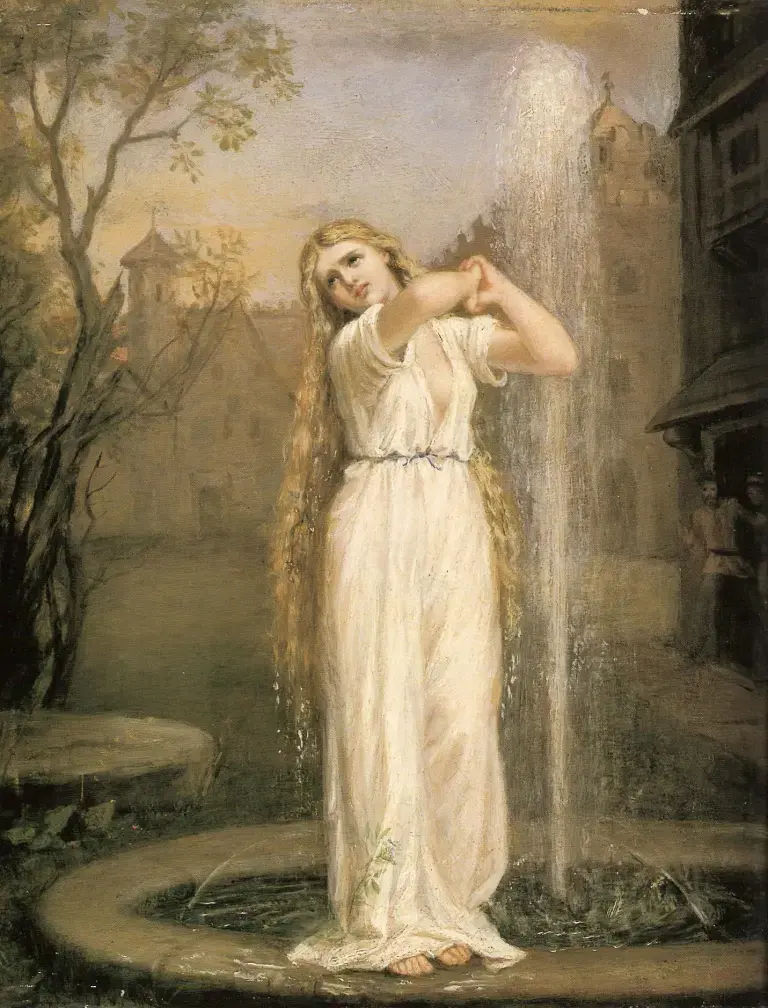
This German novella recounts the tale of a water nymph, the titular Undine, who marries a human knight named Huldbrand in order to gain an immortal soul. Within three years of its publication in 1811, the story received an operatic adaptation, and it was first translated into English in 1817 by George Soane, who also adapted Undine for the stage in 1821. An early addition to the genre of tragic romantasy, Undine influenced countless other authors of the nineteenth century, including Sir Walter Scott, Samuel Taylor Coleridge, Edgar Allen Poe, and Hans Christian Anderson, author of the beloved fairytale “The Little Mermaid.” Unfortunately, Fouqué died in relative literary obscurity in 1843, but Undine became an international bestseller, its success surpassing that of all his other written works.
Well, dear readers—what do you think of the literary bestsellers of 1811? Other notable publications of the year include Percy Bysshe Shelley’s St. Irvyne; or, The Rosicrucian, Sydney Owenson Morgan’s The Missionary: An Indian Tale, and Johann Wolfgang von Goethe’s The Autobiography of Goethe: Truth and Poetry, From My Own Life.
Have you read any of the above titles? If so, how do they compare to Jane Austen’s Sense and Sensibility? Let us know your thoughts in the comments below!
Join us again in the coming weeks for more content relating to JASP 2025: Sensibility and Domesticity, which will take place June 19-22 in historic New Bern, North Carolina. The Jane Austen Summer Program is designed to appeal to anyone with a passion for all things Jane Austen. Attendees include people from all walks of life, as well as established scholars, high school teachers, and students from middle school through graduate school. Register for JASP 2025 today!

JASP 2025 is partially supported by a grant from North Carolina Humanities.


Oh, wow! Miss Austen really was "going where no one had gone before"! Her modest self-appraisal of taking a few families in a small village setting and setting them in relation to one another (forgive me for not having the exact wording to hand) was what has stood the test of time and will last another 200 years.