


JASP 2026: Interview with Sarah Marsh, JASP Director
In anticipation of JASP 2026 we’re interviewing our esteemed staff and speakers. This year’s four-day symposium, JASP 2026: Pride, Prejudice, and the Pursuit of Happiness will take place June 11-14, 2026, in historic Greensburg, PA, the new JASP location for the foreseeable future. We will celebrate the 250th anniversary of the Declaration of Independence by exploring topics that connect Austen's Pride and Prejudice to the revolutionary context in which it was written. Activities include workshops, small-group discussions, and lectures from renowned Austen scholars. And of course, our Regency Ball is an event not to be missed!

Our first JASP team interviewee is Sarah Marsh. She is a JASP director and co-host for Jane Austen & Co. Sarah is an Associate Professor of English at Seton Hill University. Her book, Novel Constitutions and the Making of Race: A Literary and Legal History of Slavery in the Anglophone Atlantic, 1688 - 1818, is forthcoming from Oxford University Press. Sarah has been involved in JASP since its very first year!

Which JASP 2026 activities are you most looking forward to and why?
I love the Ball and the small discussion groups; but I also love the plenary lectures... actually, I think I might love it all!
What do you enjoy most about Pride and Prejudice?
Oh gosh--this is tough. There is so much to enjoy about it. I love Mr. Collins. The more I read the book the more I see how central he is to the development of the plot. But I think my current favorite thing about the book is the nuance with which the Bingley siblings, the Darcy siblings, and the older Bennet sisters talk about the future. When you dig into the early conversations they have at Netherfield, you really get this deep sense of young adult people thinking about an uncertain but quickly approaching future. In their different ways, they are each concerned with navigating it well. The characters have different virtues and vices--and there are also certain things they cannot say explicitly. The innuendo and nuance of these conversations is one of my favorite things about the novel.
Film stills from Pride and Prejudice (1995); dir. by Simon Langton
Do you have a favorite Pride and Prejudice character?

I love Mr. Bennet. He's a deeply flawed figure, in many ways, but he is also a loving and insightful one. He may also be the funniest person in all of the novels, and that is a real treat.
Do you have any favorite scenes from Pride and Prejudice?

I love the scene where Mr. Bennet tells Elizabeth that Mrs. Bennet will never see her again if she marries Mr. Collins--and he (Mr. B.) will never see Elizabeth again if she does marry him. At the surface, this seems like a moment of binary decision, but--given the very different things that Mr. and Mrs. Bennet value, as well as their own deeply unhappy marriage and flawed parenting--it's a moment of real human nuance.
What do you love about Jane Austen and her works?

The humor. Always the humor. But I'm also getting really interested in the parts of the plots that Austen situates off stage. As I get to know the novels better, I'm starting to see that she envisioned a whole world that was not part of the manifest content of the novels, but was related to that content. There is real wisdom in this: that our lives are shaped by things we cannot see.
Why should people attend JASP 2026?
JASP 2026 will give our attendees the opportunity to experience the program in a new place; Seton Hill is a beautiful little campus, and I'm so excited for people to see it. I'm also really looking forward to our JASP Evening Prayer Service at Saint Joseph Chapel. It will be wonderful to explore the religious dimension of Austen's life by welcoming attendees to experience prayers that Jane Austen wrote herself as well as eighteenth-century sacred music.
(left) Image of Seton Hill University, (right) Image of Saint Joseph Chapel at Seton Hill
How does JASP contribute to educating non scholars and the general public about Jane Austen, her works, and the period in which she lived? In your specific JASP role, what goals do you have for further public humanities initiatives/public engagement?
At Seton Hill, we always remind ourselves that every human being has a fundamental dignity that cannot be taken away--and part of the way we realize that dignity is through reading, thinking, and learning together. Public humanities engagements like JASP are important because they affirm this fundamental truth about what human beings are like. The best thing about studying the humanities is each other.
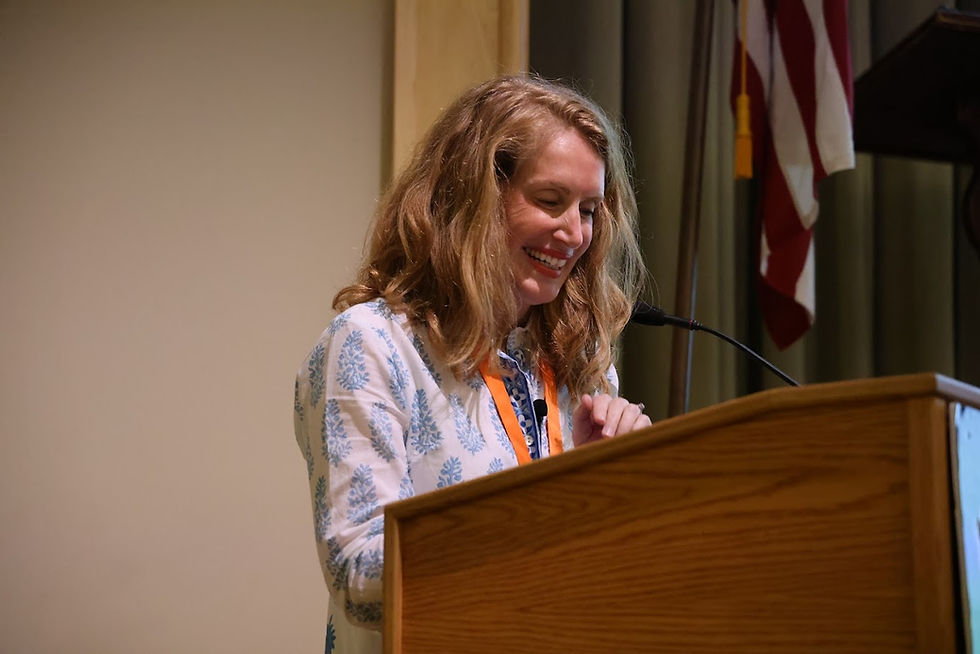
Do you have any upcoming Jane Austen-related projects and contributions?
I have a book coming out this year from Oxford University Press, titled Novel Constitutions--and its fifth chapter is a new reading of Mansfield Park that, I think, allows us to see Jane Austen as an abolitionist with a very particular, and a very subtle, kind of antislavery politics. The chapter is a major revision of Edward Said's reading of the novel in Culture and Imperialism, and I'm very excited to see what people think of it.
There is limited space for JASP 2026. Only six spots remain! Don't miss the opportunity to discuss Austen with fellow Janeites from all walks of life.

Pride, Prejudice, and the Pursuit of Happiness will mark the 250th anniversary of the Declaration of Independence through a four-day public humanities program exploring the Enlightenment roots of American democracy and the transatlantic exchange of political ideas. To honor this milestone, JASP is relocating from UNC Chapel Hill to Seton Hill University in Pennsylvania, a state closely associated with the American founding.


Comments